


As the FCJ Centre for Spirituality and EcoJustice wraps up another year of retreats, prayer, and ecojustice work, MaryAnne fcJ, our Director, takes stock of what’s happened — and what’s ahead.
For readers who don’t know the Centre, how would you describe what happens here in a typical month?
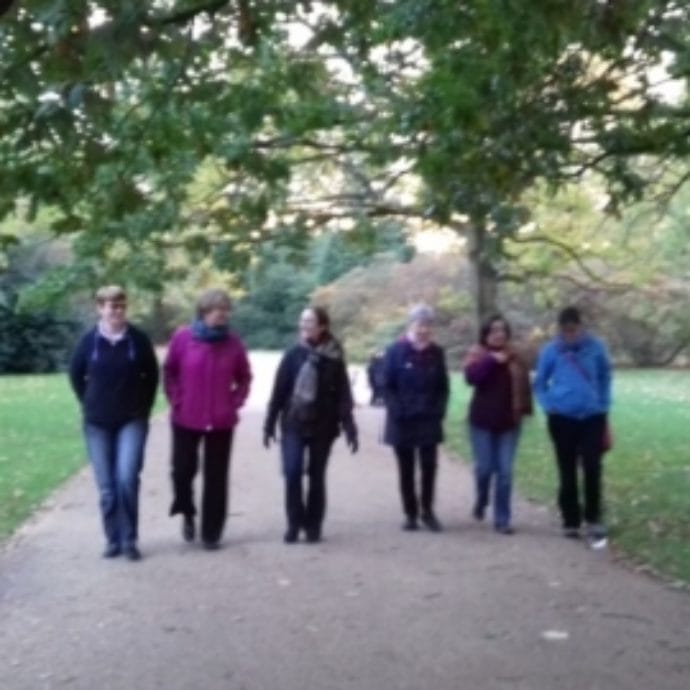
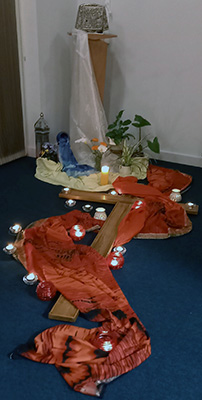 We welcome people in to pray, to learn, and to build community together, with regular offerings like a Taizé prayer, a Christian meditation group, and at least one Saturday retreat day each month, often themed around the seasons of the Church or the Earth.
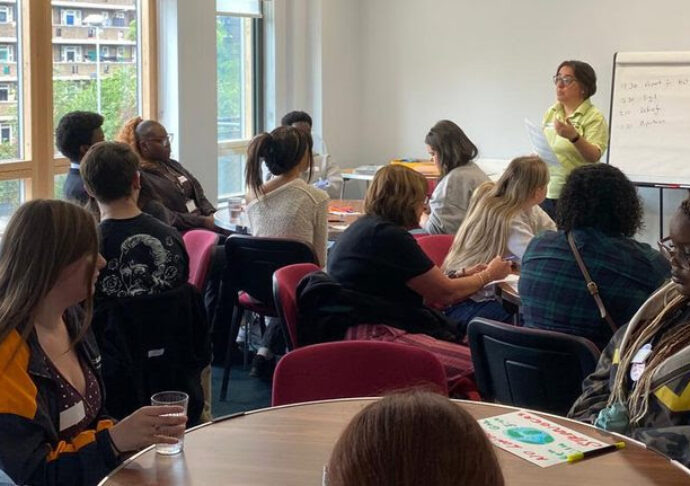
We also host charities and other organisations using the premises, and every month we join the vigil outside the Home Office, praying for migrants and refugees who’ve died seeking safety in Europe. Last June we brought a group of sixth formers along — a powerful moment of learning for us all.
What does « ecojustice » mean to you personally, and how does it connect with spirituality?
Ecojustice is social justice expanded: right relationship with God, with ourselves, and with our neighbour — where « neighbour » includes the mountains, the rivers, every creature we share this planet with.
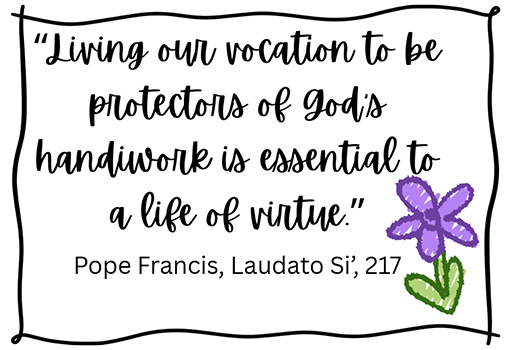
If God is Creator, we’re called to live justly with all of creation. This care for creation has become mainstream Catholic teaching over the last decades, through Pope Francis’s Laudato Si’ and, more recently, Pope Leo’s Magnifica Humanitas, which has a line I love: « While the tumult of confusion is all around us, goodness grows silently from the earth. » (MH 210)
Looking back on this past year — your second year — is there a moment that particularly stayed with you?
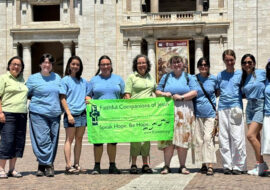
Last July, with the Columbans, we brought a group of sixth formers to a mass lobby of Parliament on the climate crisis — meeting MPs, members of the House of Lords, and Bishop John Arnold. Afterwards, some of those young people spoke to a parliamentary group about their experience of climate change, so articulately, and it was wonderful to have their voices heard at that level.
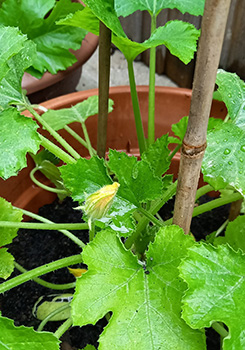 But honestly, the moments I treasure most are smaller: someone coming for a crochet evening or to help with the garden, then a prayer evening, gradually starting to feel this place is home. That’s always been our dream — a place where community is built.
Climate anxiety feels very current right now. What role can a spirituality centre play in that?
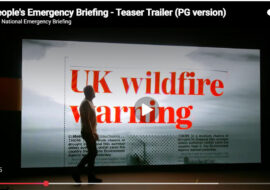
I think we’re a safe place for people to bring that anxiety and put words to it. When we hosted the film People’s Emergency Briefing, people wanted to share ideas, and stories of hope, too. Did you know that thanks to conservation work, there are now over 600 pairs of marsh harriers in this country, up from just one pair in 1973? (Source: RSPB) Stories like that matter. It’s not all doom and gloom. New life is coming and cultivating that hope has become a bit of a mantra for us.
Looking ahead, what’s your hope for the Centre next year?
This year’s been about building connections, with organisations and with people. Next year, I’d like to deepen those relationships rather than start lots of new things. We’ll widen the circle a little bit, but go deeper with the people already here.
Full interview coming soon on the new website of the FCJ Centre for Spirituality and EcoJustice. Thanks to Gabriela Flores for the time and skill to produce this interview.