

Submitted by Sr Madeleine fcJ, from the FCJ Toronto community. Madeleine is on the team at Ignatius Jesuit Centre, a place of learning, reflection, and ecological care, located on 600 acres of farmland, forest, wetlands, and trails just north of Guelph. Rooted in the Jesuit tradition, IJC brings together spirituality, land stewardship, farming, and community life in ways that respond to the needs of our time.
What does ecological conversion mean? Pope Francis called us all to ecological conversion in Laudato Si’, but how do we get beyond the simplistic mantra of “Re-use, re-cycle, reduce”? As with any conversion, the journey of ecological conversion is life-long. It aims to open us to receive more of God’s grace through an intentional choice of welcoming particular values and practices and rejecting others. At the same time, it bears witness to people around us that God’s presence, power, and call in our lives is real and invites them to make a similar journey in their own lives. I want to share an episode in my own process of ecological conversion. There are many others, but this one well illustrates some of the ideas that have been informing my life in the past several months.
One part of ecological conversion is to deepen our awareness of what it means that we are part of creation. For too long, the mind-set that humans have “dominion” over the Earth has served to separate us from creation. Knowing that we are made in the image and likeness of God and entrusted with “having dominion” and “tilling” the garden that God gave us for our home, as a species, we have treated the world around us as merely a source of raw materials from which we can fashion anything our hearts desire.
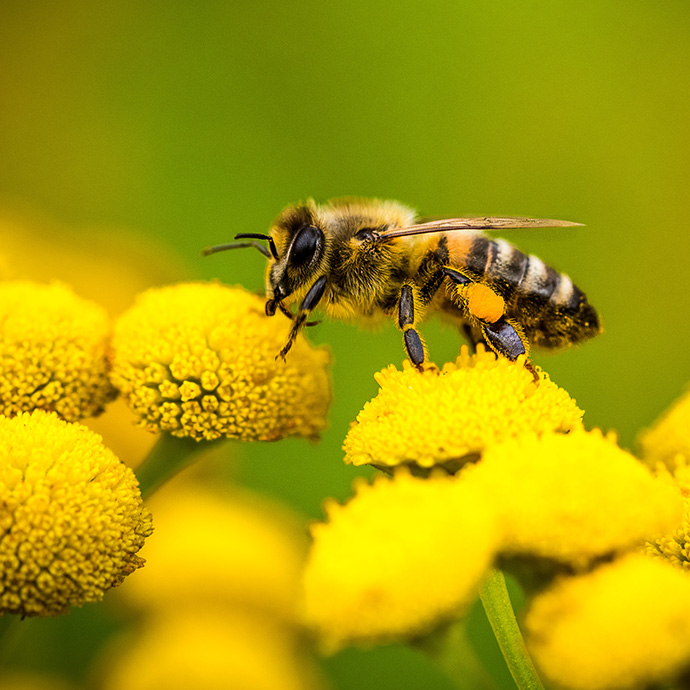
As a little girl, my sister and I decided that we wanted to fly. We tried creating all kinds of mixtures to rub on our shoulder blades, trying to grow wings. Our recipes use various foods and products to which we added natural ingredients. I remember vividly one mixture of toothpaste and “bee powder”. We made the be powder by stepping on bees as they collected nectar from clover. We would then lay the bees to dry on the curb of the sidewalk. When they could be crumbled into a powder, we stirred it into the toothpaste (or what ever we had chosen as a base). Sara would rub it on my should blades and I would rub it on hers. Then we would inspect our backs each night for a week to see if the recipe worked. We would also try to jump off the garage roof thinking that maybe we didn’t need visible wings for the recipe to work. Needless to say, none of our concoctions produced flight. I never gave a thought to the hundreds, perhaps thousands of bees that we murdered in the course of our experiments. Only when I was on sabbatical a few years ago did I remember my careless destruction of so many beings, all of whom wanted to live as much as I do. My tears of repentance continued to many days. When I went to confession, I could hardly choke the words out…
Pope Francis explained in Laudato Si’ that the interpretation of Genesis as giving us complete freedom over the rest of creation is not accurate. Yes, we are a special kind of creation, endowed with creativity and intelligence, capable of co-creating with God. Yes, we have spiritual abilities deriving from the freedom God has given us. Yes, we have an eternal destiny. But all healthy ecosystems have limits and a major concern of humanity in recent decades has been to live and create and use resources as if we can transcend all limits. Yet, our creativity and intelligence do NOT mean we should be and do and become whatever is pleasing to us. Our freedom is not license. Our eternal destiny is, as Teilhard de Chardin explained, to tend and care for all of creation, helping to lead it to its fulness where God is all in all.
Read Madeleine’s blog posts on the Ignatius Jesuit Centre website. She has started a series of Musings on Lent from an Ecospiritual Perspective.
Photos: Marjorie and Stephan in Adobe Stock